Ditch the Detox: 10 Realistic Resolutions for a Healthy New Year

The holidays have come and gone. If you’re feeling a little less Merry and Bright, but more Dreary with pants a bit tight … that’s okay! There’s no need to punish yourself with a restrictive detox or cleanse. Below are 10 ways to feel back on track without sacrificing your wallet or your sanity.

(1) Ditch the Detox

Lizzo once saidtruth hurts, needed something more exciting.” The boring truth is that any food, supplement, meal plan or diet labeled “detox” is likely a marketing gimmick. There, I said it.

Before becoming a buzz word, detoxification was solely termed as a medical procedure performed to remove life-threatening toxins (poison, alcohol, drugs). Today, a simple internet search provides thousands of hits promoting ways to “flush your body of toxins,” and “boost health and wellbeing.” Unfortunately, there is little evidence supporting that what we eat removes toxic materials from our body.1-5 Furthermore, detox and cleanse diets are often challenging, unsustainable, promote unnecessary supplements and restrict our bodies from essential nutrients.

But don’t worry friends, our bodies have an impressive detox team hard at work every day: the liver, gastrointestinal tract and kidneys. Our liver filters and converts any suspect substances into compounds that are then excreted by the intestines or kidneys. It’s quite a remarkable process.

Does a nutritious diet and healthy lifestyle support the function of these detoxifying organs? Absolutely.5,6 Do you need to fast, juice or guzzle lemon water to reap the benefits? Nope! Save your esophagus from the apple cider vinegar cleanse, let’s talk realistic resolutions …

(2) Clean the Kitchen

Turn on some music, grab the trash can and channel your inner Marie Kondo. A clean and organized kitchen can spark the feeling of a fresh start.

  • Take everything out of your cabinets and fridge
  • Toss (or compost) dated, stale or not-gonna-finish-it food items
  • Pack up remaining holiday baked goods to take into the office or share with neighbors
  • Stock up on the good stuff – fruits and vegetables (frozen works too), dairy, lean proteins, nuts, legumes and whole grains
  • Get organized – a clean look can feel motivating

(3) Back off the Booze

Give your liver a break from working overtime this holiday season. Our livers are very resilient organs, but do need a break to recover. It can help your sleep, skin, wallet, waistline and even those post-holiday Sunday Scaries. In fact, a 2016 study found that folks who did a “Dry January” reaped these benefits and drank less six months later, regardless of their January success.7

(4) Stay Hydrated

Water is the MVP in our body. It’s essential for all our biochemical processes. Water supports digestion, absorption and waste elimination. Therefore, hydration is key for the flushing properties of the gastrointestinal tract and kidneys.8

How much water do you need? Well there’s no perfect answer. It depends on things like your body size, environment, health, and activity levels. According the folks at the National Academies of Sciences, Engineering, and Medicine, women should aim for 2.7 liters (~90 oz) and men should aim for 3.7 liters (~125 oz).9 This intake should come mostly from water, followed by foods (fruits, vegetables, soups, etc.).

What’s the easiest way to know if your hydrated? Just check out your pee.

(5) Aim for Whole Foods

Making whole foods the foundation of your diet can encourage the good stuff (fruits, vegetables, whole grains, dairy and lean proteins), while reducing the not-so-good stuff (added sugars, refined carbs, excess sodium). Foods without an extensive ingredient list are often a safe bet. However, whole foods don’t necessarily exclude all packaged foods. Nutritious packaged options can include frozen/canned fruits and veggies (unsweetened and low-sodium), nuts, legumes, whole grains and plain dairy products.

(6) Focus on Fiber

Fiber does a lot of great things. It lowers cholesterol, feeds healthy gut bacteria and improves blood sugar control.10 Fiber also keeps us regular by eliminating waste – a key part of our natural detoxification process. Incorporate fibrous foods like fruits, vegetables, whole grains, nuts and legumes into each of your meals.

(7) Add More Plants

Americans can eat more plants. The majority of the U.S. does not eat the recommended amount of whole grains (98% of us), vegetables (90% of us) and fruit (80% of us) – yikes!

Plants contain phytochemicals which give food their unique color and taste, and help reduce the risk of many diseases.11 Furthermore, many of these plant-derived compounds act as antioxidants, scavenging dangerous free radicals in our body and supporting the liver with detoxification.5,6  

Make plant-based foods the base of your plate and eat the rainbow. Aim for a variety of fruits, vegetables, whole grains, nuts and legumes to reap the benefits of the different nutrients and phytochemicals.

(8) Get Moving

Exercise not only helps with weight management, but improves our cardiovascular health, energy levels, sleep, confidence, sex life and mental health.12,13 No need to sign up for a race (unless you want that motivation), even small steps can go a long way: take the stairs, park in the back of the parking lot, or schedule walking breaks at work. If a gym or fitness class is too costly or intimidating, you can pick from thousands of free exercise videos on YouTube.

(9) Take a Breath

Scheduling time to meditate or disconnect can go a long way. Mindful meditation has been linked to decreased stress, increased emotional intelligence, and improved mental health.14 Practicing meditation may also support self-control efforts – an extra benefit for folks with New Year’s resolutions.15

There’s no need to pose in a cross-legged position. Meditation doesn’t have to be complicated. Schedule an alarm to step away from work for a moment of peace, use apps like Headspace, Calm, or Simple Habit for guidance, start your day with intentions, and/or finish your day with gratitude.

(10) Be SMART about your Goals

Setting goals is a great way to foster direction, purpose, and motivation towards a targeted behavior.16,17 However, for many of us, these intentions remain in our head and become an afterthought by February. Reflect on what’s important to you and why, and write down your goals in the SMART way:

  • SpecificI will practice meditation
  • Measurable3 times a week
  • AttainableI have the Headspace app
  • RelevantI’m working on stress-reduction techniques
  • Time-basedFor the next month (then I’ll try 4 times a week)

Share your goals with loved ones, revisit them on a regular basis, and stick with it! It often takes more than two months to form a habit, and even slip-ups here and there won’t kill your efforts.18

Conclusion

While these 10 tips aim to support sustainable healthy habits, do what works best for you and fits into your lifestyle.

For some folks, committing to a New Year’s diet or challenge is a necessary kick-in-a$$ way to get back on track. If that’s the case for you, go for it! Aim for plans that incorporate all food groups (sadly donuts don’t count), focus on nourishment and not restriction, and encourage lifelong habits.

Wishing you all a Happy and Healthy New Year

Cheers, Megan

References:

  1. Klein AV, Kiat H. Detox diets for toxin elimination and weight management: a critical review of the evidence. Journal of Human Nutrition and Dietetics. 2015;28(6):675-686.
  2. Sears ME, Genuis SJ. Environmental Determinants of Chronic Disease and Medical Approaches: Recognition, Avoidance, Supportive Therapy, and Detoxification. Journal of Environmental and Public Health. 2012;2012:15.
  3. Heaner, M. Detox Diets: Myths vs. Reality. Idea Health and Fitness Association. 2013. Accessed from https://www.ideafit.com/personal-training/detox-diets-myths-vs-reality/
  4. Harvard Women’s Health Watch. The dubious practice of detox. Harvard Health Publishing. 2008. Accessed from https://www.health.harvard.edu/staying-healthy/the-dubious-practice-of-detox
  5. Schaeffer, J. Diet and Detoxification. Today’s Dietitian. 2014; 16(3).
  6. Cline, John C, MD,B.Sc, I.F.M.C.P. Nutritional aspects of detoxification in clinical practice. Altern Ther Health Med. 2015;21(3):54-62. https://search-proquest-com.ccmain.ohionet.org/docview/1696478074?accountid=50452.
  7. de Visser RO, Robinson E, Bond R. Voluntary temporary abstinence from alcohol during “Dry January” and subsequent alcohol use. Health Psychology. 2016;35(3):281-289.
  8. Popkin BM, D’Anci KE, Rosenberg IH. Water, hydration, and health. Nutrition Reviews. 2010;68(8):439-458.
  9. Institute of Medicine. Dietary Reference Intakes for Water, Potassium, Sodium, Chloride, and Sulfate. Washington, DC: The National Academies Press; 2005. https://doi.org/10.17226/10925.
  10. Mudgil D, Barak S. Composition, properties and health benefits of indigestible carbohydrate polymers as dietary fiber: A review. International Journal of Biological Macromolecules. 2013;61:1-6.
  11. Zhang YJ, Gan RY, Li S, et al. Antioxidant Phytochemicals for the Prevention and Treatment of Chronic Diseases. Molecules. 2015;20(12):21138-21156.
  12. Sharma, A., Madaan, V., & Petty, F. D. (2006). Exercise for Mental Health. Primary Care Companion to The Journal of Clinical Psychiatry8(2), 106.
  13. Guszkowska, M. (2004). [Effects of exercise on anxiety, depression and mood]. Psychiatr Pol, 38(4), 611-620.
  14. Chu L-C. The benefits of meditation vis-à-vis emotional intelligence, perceived stress and negative mental health. Stress and Health. 2010;26(2):169-180.
  15. Friese M, Messner C, Schaffner Y. Mindfulness meditation counteracts self-control depletion. Consciousness and Cognition. 2012;21(2):1016-1022.
  16. Pearson ES. Goal setting as a health behavior change strategy in overweight and obese adults: A systematic literature review examining intervention components. Patient Education and Counseling. 2012;87(1):32-42.
  17. Cullen KW, Baranowski TOM, Smith SP. Using goal setting as a strategy for dietary behavior change. Journal of the American Dietetic Association. 2001;101(5):562-566.
  18. Lally P, van Jaarsveld CHM, Potts HWW, Wardle J. How are habits formed: Modelling habit formation in the real world. European Journal of Social Psychology. 2010;40(6):998-1009.

Food is …

It’s the day after Thanksgiving. How are we feeling? If you enjoyed a day off, filled with food and family, I hope your hearts and bellies are both full. If you’re feeling more guilt than gratitude, I encourage you to read on. This brief post shares how food is so much more than something to ever feel bad about.

Ever hear the phrases “food is fuel” or “eat to live, don’t live to eat”? I have too. While food provides our body with energy in the form of glucose (carbohydrate), fatty acids (fat), and amino acids (protein), it offers us so much more.

Food is …

  • Memories – from the kitchen or table
  • Celebration – of birthdays, weddings, holidays, and special occasions
  • Gratitude – for the food on our table and the time spent with loved ones
  • Culture – honoring the history and heritage of our ancestors
  • Art – expressed by creative preparation or beautiful presentation
  • Sacrifice – from the animals that feed us
  • Adventure – when trying a food or cuisine for the first time
  • Hard work – by farmers from seeding to harvest
  • Spiritual – deeply rooted in religion and tradition
  • Love – an expression of affection, care, and devotion
  • Pleasure – offering us sensations of comfort and nourishment

Food is not bad. Food is not dirty (unless dropped on the floor). Food should not be feared or shamed. Are some foods more nutritious than others? Yes. Should we aim to eat a mostly healthy and wholesome diet? Absolutely. But when it comes to holidays, celebrations, and special occasions … enjoy the pleasure of food with the comfort of loved ones.

Happy Thanksgiving,

~ Megan

To Fast, or Not to Fast?

What do Kourtney Kardashian, Halle Berry, and Moby all have in common? Well, besides their eight-digit net worth, they’re all promoters of intermittent fasting.

Fasting for health reasons has gained a lot of attention recently. But is the hype merited? Is life in the fast lane right for you? Let’s break it down …

History of Fasting

While it may be trendy now, fasting has been practiced for thousands of years and is deeply rooted in religion. The word itself comes from the Anglo-Saxon word fasten, or “to hold oneself” from food.1 The sacrificial act of abstinence is still commonly practiced today during holy observations like Ramadan, Lent, and Yom Kippur.

The Physiology of Fasting

Mammals need food to survive and make babies. Period. Therefore, our bodies have evolved to adapt to hard times when food isn’t readily accessible.2 After 12 hours without food, we start a process called “lipolysis” and pull energy from fat tissue.3 Humans can live off fat stores for a few weeks, followed by protein breakdown and eventual organ failure.4 Unfortunately, there lies the reason why that McFlurry gets stored as fat in our butt, belly, and liver. Fat acts our reserve energy source, if we should ever need it.  

Popular Fasting Approaches

Continuous Calorie Restriction: This approach is different from most forms of fasting. Instead of fasting or “restraining from” food all together for a given period of time, calorie restriction reduces our overall intake of food without restricting to the point of malnutrition. This approach mimics most reduced-calorie diets.

Alternate Day Fasting: This one on, one off method allows you to eat as you please for one day, followed by a day of fasting (no calories or very few calories). 

Modified Fasting: Instead of fasting completely, this modified approach limits food intake to less than 25% of your estimated needs. A popular form of this diet is the 5:2 method. The two on, five off approach (and its #1 New York Times bestselling book) sparked a lot of today’s interest in intermittent fasting.5  Basically, you do a modified fast for two days of your choice (<500-600 kcal per day) and then eat normally for the other five days.

Time Restricted Fasting: This fasting approach confines the hours you can eat, rather than the amount you eat. For example, a common approach is limiting your food intake to 8 hours on from 12pm to 8pm, and 16 hours off from 8pm to 12pm the next day. Another popular method is only eating during the daylight hours (if you’re from New England or Alaska, you may want to rethink this approach during winter months).

Possible Health Benefits

Fasting is gaining a lot of attention in the research world. However, many studies have relied on rodents and not human subjects. While animal models are an instrumental part of research, there are disadvantages from methodological and pathophysiological perspectives.11,12 Therefore, I’ll focus on the evidence from human studies.

Weight Loss

By cutting back on how much we eat or when we eat, weight loss is expected thanks to, well, math (caloric deficit). The majority of research backs this up too. Each type of fasting approach has been linked to improved weight loss efforts.2,3, 5-10, 14, 17,18 This includes folks of all body sizes too.8

Worried about negative effects on your hunger or metabolism? A few studies found that time-restricted fasting actually reduced appetite and had no effect on metabolic rates.13,15,16 However, caloric restriction has historically been linked to metabolic adaption (slowed metabolism).21,22 So keep an eye out for more research on the specific effects of fasting.

Which approach is best? Well, it’s not exactly clear. There isn’t a ton of research directly comparing fasting approaches, however current literature shows that both intermittent fasting and caloric restriction have similar weight and fat loss effects.2,7,9,10,18 Intermittent fasting might be better at preserving lean body mass (muscle), however more research is needed to draw conclusions.10

Bottom Line: When it comes to weight loss and fat loss, intermittent fasting works … but it’s nothing magical. Its results are comparable to typical calorie-reduction diets. However, fasting may have an edge as far as muscle mass retention.

Disease Prevention

Various forms of fasting have been linked to protective effects against heart disease, diabetes, and possibly cancer.

Heart healthy effects:

  • Decreased LDL (bad) cholesterol and triglycerides8,9,17
  • Decreased blood pressure13,14
  • Decreased oxidative stress13

Diabetes prevention:

  • Improved glycemic control and insulin resistance3,13,17,18
  • Improved adipokine concentrations (fat tissue-related hormones)3,8,15,20

Cancer:

  • Only animal models have linked fasting and calorie restriction to reduced rates of cancer 19,20 
  • Indirect protective effects include decreased inflammatory markers (CRP, tumor necrosis factor-α, interleukin-1β)8,15,20 and oxidative stress13

But are these preventive effects simply due to the weight loss? Possibly. Weight loss is associated with the same observed improvements in cardio, metabolic, and inflammatory markers. However, a recent small study found that time-restricted fasting improved blood pressure, insulin sensitivity, oxidative stress, and appetite, without weight loss.13 Perhaps fasting has unique protective effects beyond weight management. Keep an eye out for more research.

Bottom Line: Intermittent fasting can have protective effects against chronic disease risk factors. Whether or not it’s related to weight loss is yet to be determined.

Cognitive Health and Aging

Caloric restriction has been linked to brain benefits via mechanisms like adaptive stress resistance, anti-inflammatory and regeneration markers, neuron synapsis, and neurogenesis (basically things that keep our brains healthy, sharp, and resilient).23-25,28 Unfortunately, the majority of this research comes from animal studies … womp womp. However, there is a growing body of research testing intermittent fasting and caloric restriction on human cognitive performance and age-related disease. The results are both promising and disappointing, so keep an eye out for more research.26-29

Bottom Line: The effects of fasting and caloric restriction may support healthy aging and cognitive health. However, more research is needed to understand the exact mechanisms and draw conclusions for humans.

Sleep and Circadian Rhythm

This is another grey area that’s based mostly on animal research. However, theories propose that daytime eating (and nighttime fasting) are a natural way to align with our sleep-wake cycle. Research links this alignment to improved hormone function, GI movements, gene expression, and metabolic phases.17,30 Additionally, human studies do show that late-night eating and night shift work are both associated with disrupted circadian rhythm and increased risk of cardio and metabolic disease.17

Bottom Line: Fasting during evening hours may support a natural “reset” in our body. However, more research on human subjects is needed to understand how.

My thoughts on Intermittent Fasting

What’s promising:   

  • It makes things black and white (good for folks who do better with routine and structure)
  • It discourages late-night (and usually mindless) eating
  • For weight management, it may feel more doable than a typical reduced-calorie diet
  • It’s linked to reduced risk of chronic disease, healthy aging, and improved circadian rhythm (directly or indirectly TBD)

What makes me hesitate:

  • Potential consequences of fasting on eating behavior (overeating, compensating, non-balanced meals, disordered eating)
  • Potential effects of meal skipping (skipping breakfast has been linked to increased risk of diabetes and heart disease)31,32
  • Potential impacts on metabolism
  • People who are pregnant, manage diabetes or a chronic health condition, or have a history of an eating disorder should consult their Doctor/Dietitian

Where you can start:

Intermittent fasting doesn’t have to be a rigorous lifestyle change. Just giving your body a little R&R from digesting foods can be a good thing. If you’re interested in trying it out, below are a few tips for time-restricted fasting:

  • Eat an early dinner
  • Make sure your dinner is balanced (includes protein, quality carbs, and healthy fats)
  • Rethink evening snacks – are they due to hunger or habit? If hunger, then adjust your dinner to be more satiating   
  • Aim to eat a healthy and balanced diet during your non-fasting periods
  • Finishing dinner by 7pm and eating breakfast after 7am can be a doable and natural way to fast for 12 hours

Conclusion

The research on intermittent fasting is fascinating! But I think more studies are needed to make any conclusions — specifically, long-term studies on humans, randomized controlled trials, and studies on clinical outcomes (disease incidence, not just disease risk factors).

If intermittent fasting works for you, rock on! If even the thought of fasting frightens you, no worries! As I’ve said before, choose the diet that best fits into your lifestyle, your nutritional needs, and your individual health goals.


Side note: If you’re interested in all things fasting, be sure to follow the work of Dr. Krista Varady. She is considered queen in this field of research and has published over 50 studies related to fasting.  


References

  1. Sabaté, J. (2004). Religion, diet and research. British Journal of Nutrition, 92(2), 199-201. doi:10.1079/BJN20041229
  2. Mattson, M. P., Longo, V. D., & Harvie, M. (2017). Impact of intermittent fasting on health and disease processes. Ageing Res Rev, 39, 46-58. doi:10.1016/j.arr.2016.10.005
  3. Cho, Y., Hong, N., Kim, K. W., Cho, S. J., Lee, M., Lee, Y. H., . . . Lee, B. W. (2019). The Effectiveness of Intermittent Fasting to Reduce Body Mass Index and Glucose Metabolism: A Systematic Review and Meta-Analysis. J Clin Med, 8(10). doi:10.3390/jcm8101645
  4. Berg JM, Tymoczko JL, Stryer L. (2002). Biochemistry. 5th edition. New York: W H Freeman. Section 30.3, Food Intake and Starvation Induce Metabolic Changes. Available from: https://www.ncbi.nlm.nih.gov/books/NBK22414/
  5. Orenstein, B. (2014). Intermittent Fasting: The Key to Long-Term Weight Loss?Today’s Dietitian, 26(12), 40. Accessed from https://www.todaysdietitian.com/newarchives/120914p40.shtml
  6. Patterson, R. E., & Sears, D. D. (2017). Metabolic Effects of Intermittent Fasting. Annual Review of Nutrition, 37(1), 371-393. doi:10.1146/annurev-nutr-071816-064634
  7. Schubel, R., Nattenmuller, J., Sookthai, D., Nonnenmacher, T., Graf, M. E., Riedl, L., . . . Kuhn, T. (2018). Effects of intermittent and continuous calorie restriction on body weight and metabolism over 50 wk: a randomized controlled trial. Am J Clin Nutr, 108(5), 933-945. doi:10.1093/ajcn/nqy196
  8. Varady, K. A., Bhutani, S., Klempel, M. C., Kroeger, C. M., Trepanowski, J. F., Haus, J. M., . . . Calvo, Y. (2013). Alternate day fasting for weight loss in normal weight and overweight subjects: a randomized controlled trial. Nutrition Journal, 12(1), 146. doi:10.1186/1475-2891-12-146
  9. Varady, K. A., Bhutani, S., Klempel, M. C., & Kroeger, C. M. (2011). Comparison of effects of diet versus exercise weight loss regimens on LDL and HDL particle size in obese adults. Lipids in health and disease10, 119. doi:10.1186/1476-511X-10-119
  10. Varady, K. A. (2011). Intermittent versus daily calorie restriction: which diet regimen is more effective for weight loss? Obes Rev, 12(7), e593-601. doi:10.1111/j.1467-789X.2011.00873
  11. Even, P. C., Virtue, S., Morton, N. M., Fromentin, G., & Semple, R. K. (2017). Editorial: Are Rodent Models Fit for Investigation of Human Obesity and Related Diseases?. Frontiers in nutrition4, 58. doi:10.3389/fnut.2017.00058
  12. Baker, D. H. (2008). Animal Models in Nutrition Research. The Journal of Nutrition, 138(2), 391-396. doi:10.1093/jn/138.2.391
  13. Sutton, E. F., Beyl, R., Early, K. S., Cefalu, W. T., Ravussin, E., & Peterson, C. M. (2018). Early Time-Restricted Feeding Improves Insulin Sensitivity, Blood Pressure, and Oxidative Stress Even without Weight Loss in Men with Prediabetes. Cell Metabolism, 27(6), 1212-1221.e1213. doi:https://doi.org/10.1016/j.cmet.2018.04.010
  14. Gabel, K., Hoddy, K. K., Haggerty, N., Song, J., Kroeger, C. M., Trepanowski, J. F., … Varady, K. A. (2018). Effects of 8-hour time restricted feeding on body weight and metabolic disease risk factors in obese adults: A pilot study. Nutrition and healthy aging4(4), 345–353. doi:10.3233/NHA-170036
  15. Moro, T., Tinsley, G., Bianco, A., Marcolin, G., Pacelli, Q. F., Battaglia, G., . . . Paoli, A. (2016). Effects of eight weeks of time-restricted feeding (16/8) on basal metabolism, maximal strength, body composition, inflammation, and cardiovascular risk factors in resistance-trained males. Journal of Translational Medicine, 14(1), 290. doi:10.1186/s12967-016-1044-0
  16. Ravussin, E. , Beyl, R. A., Poggiogalle, E. , Hsia, D. S. and Peterson, C. M. (2019), Early Time‐Restricted Feeding Reduces Appetite and Increases Fat Oxidation But Does Not Affect Energy Expenditure in Humans. Obesity, 27: 1244-1254. doi:10.1002/oby.22518
  17. Patterson, R. E., Laughlin, G. A., LaCroix, A. Z., Hartman, S. J., Natarajan, L., Senger, C. M., . . . Gallo, L. C. (2015). Intermittent Fasting and Human Metabolic Health. Journal of the Academy of Nutrition and Dietetics, 115(8), 1203-1212. doi:10.1016/j.jand.2015.02.018
  18. Barnosky, A. R., Hoddy, K. K., Unterman, T. G., & Varady, K. A. (2014). Intermittent fasting vs daily calorie restriction for type 2 diabetes prevention: a review of human findings. Transl Res, 164(4), 302-311. doi:10.1016/j.trsl.2014.05.013
  19. Lv M, Zhu X, Wang H, Wang F, Guan W (2014) Roles of Caloric Restriction, Ketogenic Diet and Intermittent Fasting during Initiation, Progression and Metastasis of Cancer in Animal Models: A Systematic Review and Meta-Analysis. PLOS ONE 9(12): e115147. https://doi.org/10.1371/journal.pone.0115147
  20. Harvie, M. N., & Howell, T. (2016). Could Intermittent Energy Restriction and Intermittent Fasting Reduce Rates of Cancer in Obese, Overweight, and Normal-Weight Subjects? A Summary of Evidence. Adv Nutr, 7(4), 690-705. doi:10.3945/an.115.011767
  21. Redman, L. M., Heilbronn, L. K., Martin, C. K., de Jonge, L., Williamson, D. A., Delany, J. P., & Ravussin, E. (2009). Metabolic and behavioral compensations in response to caloric restriction: implications for the maintenance of weight loss. PLoS One, 4(2), e4377. doi:10.1371/journal.pone.0004377
  22. Martin, C. K., Heilbronn, L. K., Jonge, L. , DeLany, J. P., Volaufova, J. , Anton, S. D., Redman, L. M., Smith, S. R. and Ravussin, E. (2007), Effect of Calorie Restriction on Resting Metabolic Rate and Spontaneous Physical Activity. Obesity, 15: 2964-2973. doi:10.1038/oby.2007.354
  23. Gillette-Guyonnet, S., & Vellas, B. (2008). Caloric restriction and brain function. Current Opinion in Clinical Nutrition & Metabolic Care, 11(6), 686-692. doi:10.1097/MCO.0b013e328313968f
  24. Shojaie, M., Ghanbari, F., & Shojaie, N. (2017). Intermittent fasting could ameliorate cognitive function against distress by regulation of inflammatory response pathway. Journal of advanced research8(6), 697–701. doi:10.1016/j.jare.2017.09.002
  25. Martin, B., Mattson, M. P., & Maudsley, S. (2006). Caloric restriction and intermittent fasting: two potential diets for successful brain aging. Ageing research reviews5(3), 332–353. doi:10.1016/j.arr.2006.04.002
  26. Witte, A. V., Fobker, M., Gellner, R., Knecht, S., & Flöel, A. (2009). Caloric restriction improves memory in elderly humans. Proceedings of the National Academy of Sciences, 106(4), 1255-1260. doi:10.1073/pnas.0808587106
  27. Van Cauwenberghe, C., Vandendriessche, C., Libert, C., & Vandenbroucke, R. E. (2016). Caloric restriction: beneficial effects on brain aging and Alzheimer’s disease. Mamm Genome, 27(7-8), 300-319. doi:10.1007/s00335-016-9647-6
  28. Brandhorst, S., Choi, In Y., Wei, M., Cheng, Chia W., Sedrakyan, S., Navarrete, G., . . . Longo, Valter D. (2015). A Periodic Diet that Mimics Fasting Promotes Multi-System Regeneration, Enhanced Cognitive Performance, and Healthspan. Cell Metabolism, 22(1), 86-99. doi:https://doi.org/10.1016/j.cmet.2015.05.012
  29. Cherif, A., Roelands, B., Meeusen, R., & Chamari, K. (2016). Effects of Intermittent Fasting, Caloric Restriction, and Ramadan Intermittent Fasting on Cognitive Performance at Rest and During Exercise in Adults. Sports Medicine, 46(1), 35-47. doi:10.1007/s40279-015-0408-6
  30. Longo, V. D., & Panda, S. (2016). Fasting, Circadian Rhythms, and Time-Restricted Feeding in Healthy Lifespan. Cell Metab, 23(6), 1048-1059. doi:10.1016/j.cmet.2016.06.001
  31. Rong, S., Snetselaar, L. G., Xu, G., Sun, Y., Liu, B., Wallace, R. B., & Bao, W. (2019). Association of Skipping Breakfast With Cardiovascular and All-Cause Mortality. Journal of the American College of Cardiology, 73(16), 2025-2032. doi:https://doi.org/10.1016/j.jacc.2019.01.065
  32. Ballon, A., Neuenschwander, M., & Schlesinger, S. (2018). Breakfast Skipping Is Associated with Increased Risk of Type 2 Diabetes among Adults: A Systematic Review and Meta-Analysis of Prospective Cohort Studies. The Journal of Nutrition, 149(1), 106-113. doi:10.1093/jn/nxy194

Nutrition, Exercise, and Mood: Tying it all together

This past Thursday was World Mental Health Day. Didn’t know? Read more about it here. In support of its cause to raise awareness and promote a conversation, I’m sharing what research shows about the role of nutrition and exercise in mental health care. I feel passionate about this field, and credit it towards my purpose in becoming an RD and starting this site on Food, Fitness, and Feels. I hope you enjoy it and can find a nugget or two that’s of value to your wellbeing.

When it comes to how we feel mentally, there’s a lot going on. Mental health is a multifaceted topic. It’s shaped by our environment, our relationships, our health, our job, our finances, our neurological makeup, and so much more. While we can’t control many of these factors, there are a few areas that we can certainly try. There’s considerable research that links nutrition and exercise habits to improved mood. Let’s break it down …

Nutrition and Mental Health

Food and mood. It’s a thing … and it’s catching on. Nutritional psychiatry is a promising field that’s bringing many health professionals together to address mental health. While we know that a poor diet can make us feel lousy physically, it can also affect how we feel mentally too. Research has connected nutrition (or lack thereof) to our mood via effects on our immune system, brain plasticity, oxidative biology, and microbiome.1,2

Hot off the press, a study published last week found that even just a 3-week diet intervention can improve depressive symptoms in young adults with depression. The findings are very encouraging and justify further research in nutritional psychiatry.

Foods that may help:

  • Healthy fats: Our brain relies on fat! In fact, our brains are made up of nearly 60% fat.3 Foods rich in omega-3 fats, like fish, walnuts, chia seeds, and flaxseed, influence our brain membrane, neurotransmitter activity, and neurological proteins like brain-derived neurotrophic factors (BDNF).1-4,6
  • Zinc: This mineral, or lack thereof, has been associated with depression and psychosis.5,6 It has an important role in brain cells, hippocampus function, and neurotransmitter receptors.5 Incorporate foods high in zinc into your diet, like oysters, crab, beans, and chicken.
  • B and D vitamins: Research links deficiencies in these two vitamins to depression.2,6,7 Ensure you get enough B’s from whole grains, fish, dairy, leafy greens, legumes, eggs, and poultry, and D’s from fortified dairy, eggs, fish, and sunlight.
  • Fiber: Fiber may have an indirect effect on our mental health through its role in our microbiome. There’s a lot of emerging research that connects our gut health to our mental health via a crazy thing called the gut-brain axis. Fiber acts as a prebiotic and feeds gut bacteria. Nourish those little guys with foods like onions, garlic, oats, bananas, and asparagus.  

Foods that may not help:

  • Red and processed meats: Studies have found that diets high in red and processed meat are associated with increased levels of inflammation and depression.8-11 However, unprocessed red meat is indeed a source of zinc and vitamin B12. Therefore, moderate amounts of red meat, while in an otherwise healthy diet, may have a protective role in mental health.12 Keep an eye out for more research.
  • Highly refined foods: Diets high in refined carbs, added sugars, and saturated fats can promote inflammation, affect brain function, and have been linked to depression and anxiety.8,10,13-15 So aim to be mindful of sweets, sodas, and fried-foods.

Physical Activity and Mental Health

In the wise words of Forrest Gump, these two areas go together “like peas and carrots.” Over the last 20 years, there’s been a growing amount of literature highlighting the positive effects of exercise on general mood disorders like anxiety and depression.16,17 Physical activity can directly and indirectly improve our mental health.   

Direct effects: Exercise and increased blood flow influence our brain function and how we respond to stress.18-20 It’s also associated with serotonin turnover and hippocampus neurogenesis, which affect our mood and mood regulation.17,20 The physical stress of exercise can also help with anxiety sensitivity too. The repeated exposure to sensations like heart racing, sweating, and rapid breathing (without any negative outcomes), can be an effective treatment for those who experience anxiety or panic attacks.17

Indirect effects: Physical activity can improve other areas in our life that affect our mood. Exercise is linked to improved sleep, confidence, energy, sex drive, and weight management.17-20 Additionally, it provides us with a healthy outlet to deal with day-to-day stressors.18,19 Outdoor exercise may give you an even bigger bang for your buck. Exposure to nature and green spaces has been associated with reduced stress and improve mood.21-22

How to get moving:

  • Take more walks. Better yet, take more walks outside. Promote walking meetings at work, walk while you call family or friends, park in the back of parking lots, incorporate walks into your after-work de-stress routine.
  • Change up your commute. Try biking or getting off at an earlier bus/metro stop and walking the rest.
  • Try out “Exercise Snacks
  • Join a recreational sports team. Bonus – joining a team can increase your sense of belonging and social support, which is also linked to improved mental health.23

One Size Does Not Fit All  

No need to take on multiple goals at once. Even small steps in your routine can make a big difference in how we feel. When it comes to our wellbeing, there’s no one-size-fits-all answer. I hope you can find the nutritious foods or activities that fit into your lifestyle, your needs, and your personal goals.

Important note: Mental health conditions are complicated. While lifestyle changes are important and can make us feel better, they are just a few options in a growing field of potential treatments. For some folks, tweaking a diet or exercise regime cannot replace specialized treatment or medication. If you or someone you know needs help, reach out to your health care provider or mental health professional.


References

  1. Jacka F. N. (2017). Nutritional Psychiatry: Where to Next?. EBioMedicine17, 24–29. doi:10.1016/j.ebiom.2017.02.020
  2. Sarris, J., Logan, A. C., Akbaraly, T. N., Amminger, G. P., Balanza-Martinez, V., Freeman, M. P., . . . Jacka, F. N. (2015). Nutritional medicine as mainstream in psychiatry. Lancet Psychiatry, 2(3), 271-274. doi:10.1016/s2215-0366(14)00051-0
  3. Chang, C. Y., Ke, D. S., & Chen, J. Y. (2009). Essential fatty acids and human brain. Acta Neurol Taiwan, 18(4), 231-241.
  4. Logan, A. C. (2004). Omega-3 fatty acids and major depression: A primer for the mental health professional. Lipids in Health and Disease, 3(1), 25.
  5. Petrilli, M. A., Kranz, T. M., Kleinhaus, K., Joe, P., Getz, M., Johnson, P., … Malaspina, D. (2017). The Emerging Role for Zinc in Depression and Psychosis. Frontiers in pharmacology8, 414. doi:10.3389/fphar.2017.00414
  6. Rao, T. S. S., Asha, M. R., Ramesh, B. N., & Rao, K. S. J. (2008). Understanding nutrition, depression and mental illnesses. Indian Journal of Psychiatry50(2), 77–82.
  7. Penckofer, S., Kouba, J., Byrn, M., & Ferrans, C. E. (2010). Vitamin D and Depression: Where is all the Sunshine? Issues in Mental Health Nursing31(6), 385–393
  8. Berk, M., Williams, L. J., Jacka, F. N., O’Neil, A., Pasco, J. A., Moylan, S., . . . Maes, M. (2013). So depression is an inflammatory disease, but where does the inflammation come from? BMC Med, 11(1), 200.
  9. Sanchez-Villegas, A., Toledo, E., de Irala, J., Ruiz-Canela, M., Pla-Vidal, J., & Martinez-Gonzalez, M. A. (2012). Fast-food and commercial baked goods consumption and the risk of depression. Public Health Nutr, 15(3), 424-432.
  10. Kiecolt-Glaser, J. K. (2010). Stress, Food, and Inflammation: Psychoneuroimmunology and Nutrition at the Cutting Edge. Psychosomatic Medicine72(4), 365–369.
  11. Zhang, Y., Yang, Y., Xie, M. S., Ding, X., Li, H., Liu, Z. C., & Peng, S. F. (2017). Is meat consumption associated with depression? A meta-analysis of observational studies. BMC psychiatry17(1), 409. doi:10.1186/s12888-017-1540-7
  12. Jacka, F. N., Pasco, J. A., Williams, L. J., Mann, N., Hodge, A., Brazionis, L., & Berk, M. (2012). Red Meat Consumption and Mood and Anxiety Disorders. Psychotherapy and Psychosomatics, 81(3), 196-198. doi:10.1159/000334910
  13. Molteni, R., Barnard, R. J., Ying, Z., Roberts, C. K., & Gomez-Pinilla, F. (2002). A high-fat, refined sugar diet reduces hippocampal brain-derived neurotrophic factor, neuronal plasticity, and learning. Neuroscience, 112(4), 803-814. doi:10.1016/s0306-4522(02)00123-9
  14. Jacka, F. N., Pasco, J. A., Mykletun, A., Williams, L. J., Hodge, A. M., O’Reilly, S. L., . . . Berk, M. (2010). Association of Western and traditional diets with depression and anxiety in women. Am J Psychiatry, 167(3), 305-311
  15. Jacka, F. N., Mykletun, A., Berk, M., Bjelland, I., & Tell, G. S. (2011). The association between habitual diet quality and the common mental disorders in community-dwelling adults: the Hordaland Health study. Psychosom Med, 73(6), 483-490.
  16. Strohle, A. (2009). Physical activity, exercise, depression and anxiety disorders. J Neural Transm (Vienna), 116(6), 777-784. doi:10.1007/s00702-008-0092-x
  17. Stathopoulou, G., Powers, M., Berry, A., Smits, J., & Otto, M. (2006). Exercise Interventions for Mental Health: A Quantitative and Qualitative Review. Clinical Psychology: Science and Practice, 13, 179-193. doi:10.1111/j.1468-2850.2006.00021.x
  18. Sharma, A., Madaan, V., & Petty, F. D. (2006). Exercise for Mental Health. Primary Care Companion to The Journal of Clinical Psychiatry8(2), 106.
  19. Guszkowska, M. (2004). Effects of exercise on anxiety, depression and mood. Psychiatr Pol, 38(4), 611-620.
  20. Lucassen, P. J., Meerlo, P., Naylor, A. S., van Dam, A. M., Dayer, A. G., Fuchs, E., . . . Czeh, B. (2010). Regulation of adult neurogenesis by stress, sleep disruption, exercise and inflammation: Implications for depression and antidepressant action. Eur Neuropsychopharmacol, 20(1), 1-17. doi:10.1016/j.euroneuro.2009.08.00
  21. Ward Thompson, C., Roe, J., Aspinall, P., Mitchell, R., Clow, A., & Miller, D. (2012). More green space is linked to less stress in deprived communities: Evidence from salivary cortisol patterns. Landscape and Urban Planning, 105(3), 221-229.
  22. Beyer, K. M., Kaltenbach, A., Szabo, A., Bogar, S., Nieto, F. J., & Malecki, K. M. (2014). Exposure to neighborhood green space and mental health: evidence from the survey of the health of Wisconsin. Int J Environ Res Public Health, 11(3), 3453-3472.
  23. Harandi, T. F., Taghinasab, M. M., & Nayeri, T. D. (2017). The correlation of social support with mental health: A meta-analysis. Electronic Physician9(9), 5212–5222.

A New Kind of Snack

You just finished your 6am spin class. You’re glistening. You refuel with a high-protein, flaxseed, green smoothie. You feel healthy and ready to take on the day. Your body is a temple. And then you sit

You sit in traffic on your way to work, you sit in front of the computer at work, you sit to eat lunch, you sit in traffic on your way home, you sit to eat dinner, and then you sit on the couch to scroll through insta stories or watch TV.

Sound familiar? If so, you’re not alone. Most Americans sit for 6 to 8 hours a day.1 This amount of sedentary behavior can be problematic for our health, even if we exercise regularly or have a healthy weight.2-4

Bummer, but wait I thought you were talking about snacks?

Yes, yes, this is where the snack comes in. Exercise “snacking” that is. It’s a growing health trend that breaks up exercise into short bouts, or “snacks,” spread throughout the day. The idea is that quick bursts of strenuous activity can increase your heart rate and, over time, improve your cardiorespiratory health.

A recent study looked into this.5 The study specifically investigated the effects of exercise snacks on aerobic fitness. Researchers randomly assigned a group of young, inactive adults into a training group or a non-training control group. The training group briskly climbed 3 flights of stairs, 3 times a day, for 3 days a week. After just 6 weeks, the training group had significantly higher peak oxygen uptake and peak power output than the control group. Although the study was small, the results are promising and encourage future research on the benefits of small bouts of exercise.

Cool, cool, cool, so what does this mean for me?

Exercise snacks can improve your cardiovascular health in less than 2 months! Whether you’re a religious exerciser or just trying to hit your daily steps, these snacks can be healthy addition to your daily routine.

Help me out. Give me some snack ideas.

Here are some exercise snacks that offer a quick, free, and convenient way to improve your aerobic fitness and overall health:

  • Climb 3 flights of stairs as fast as you can, 3 times a day (just like the study)
  • Set an alarm to do 30 squats/lunges/push-ups/high knees/jumping jacks, 3 times a day 
  • Channel your inner Phoebe, and add 30-second quick bursts of running/jumping when walking with your friends, kids, or dog

Have your own idea or personal tip that keeps you moving? Leave a comment below!

Cheers friends! Happy snacking.

~ Megan


References

  1. Ussery, E. N., Fulton, J. E., Galuska, D. A., Katzmarzyk, P. T., & Carlson, S. A. (2018). Joint Prevalence of Sitting Time and Leisure-Time Physical Activity Among US Adults, 2015-2016. JAMA, 320(19), 2036-2038. doi:10.1001/jama.2018.17797
  2. Panahi, S., & Tremblay, A. (2018). Sedentariness and Health: Is Sedentary Behavior More Than Just Physical Inactivity? Frontiers in public health6, 258. doi:10.3389/fpubh.2018.00258
  3. Després, J.-P. (2016). Physical Activity, Sedentary Behaviours, and Cardiovascular Health: When Will Cardiorespiratory Fitness Become a Vital Sign? Canadian Journal of Cardiology, 32(4), 505-513. doi:https://doi.org/10.1016/j.cjca.2015.12.006
  4. Mainous, A. G., 3rd, Tanner, R. J., Rahmanian, K. P., Jo, A., & Carek, P. J. (2019). Effect of Sedentary Lifestyle on Cardiovascular Disease Risk Among Healthy Adults With Body Mass Indexes 18.5 to 29.9 kg/m(2). Am J Cardiol, 123(5), 764-768. doi:10.1016/j.amjcard.2018.11.043
  5. Jenkins, E. M., Nairn, L. N., Skelly, L. E., Little, J. P., & Gibala, M. J. (2019). Do stair climbing exercise “snacks” improve cardiorespiratory fitness? Appl Physiol Nutr Metab, 44(6), 681-684. doi:10.1139/apnm-2018-0675

The Skim on Milks

Inspired by my last post, this week I’m diving into dairy and dairy alternatives. Cheers!

If I sent my husband to the grocery store to “grab some milk” … heaven help him. These days, there are hundreds of milk options for consumers … and that’s a good thing! Different milks and milk-like beverages help meet our individual needs. However, sometimes it can be overwhelming and confusing. Let’s break it down.

Cow’s Milk

Overview: I’ll start with the OG of milks. Humans began consuming cow’s milk shortly after cattle were domesticated, approximately 8,500 years ago.1 While milk consumption varied by region and culture, the industrial revolution notably ramped up its production, distribution, and demand.1 Ever since, milk has unofficially partnered with coffee, cereal and cookies.

Processing: The milk we drink today is often pasteurized and homogenized. This is a good thing. Pasteurization heats milk to destroy harmful bacteria, and prevents us from dealing with things like tuberculosis. Homogenization is the physical emulsification process that prevents milk from creaming which gives it a nice uniform consistency.  

Nutrition: Nutrition-wise, cow’s milk offers 13 essential nutrients including high-quality protein and 3 of the 4 nutrients of public health concern (calcium, vitamin D, and potassium). Health-wise, milk and dairy intake have been linked to improved weight and bone mass and lower risk of metabolic disorders, hypertension, cardiovascular disease, and colorectal cancer … just to name a few.2-4

However, milk is a common allergy, particularly in young children.5 In these cases, it is best to avoid dairy products because an allergic reaction can be life-threatening. For other folks, dairy may lead to unpleasant digestive symptoms caused by lactose intolerance. Lactose (the natural sugar found in dairy) is digested by the lactase enzyme. Many of us don’t make enough lactase to breakdown lactose, particularly descendants of East Asia, Africa, Greece, Italy, Arab nations, Native America and Ashkenazi Jews.6,7 If that’s the case for you, opt for lactose-free milks that add the lactase enzyme. Don’t get it twisted, lactose-free milks are 100% legitimate milk. You’ll get all the nutritional benefits without “crappy” side effects.

If you don’t have a lactose intolerance, rock on! Thanks to natural selection, many of us are lucky enough to express that lactase enzyme and enjoy lattes well into our adult years.7 And, “if it ain’t broke …”

Best Bet: Skim vs. Low-fat vs. Whole … Which milk comes out on top? Well, it’s complicated.

  • Calories: Skim and low-fat milk have fewer calories than whole milk. This can be a consideration if you’re watching your weight.
  • Satiation: While whole milk may be higher in calories, it may leave you feeling fuller and less likely to overeat. This is also a consideration if you’re watching your weight.
  • Saturated fat: There’s a strong body of research linking saturated fat to increased LDL (bad) cholesterol and risk of heart disease. However, there’s some emerging research that links dairy-based fatty acids to reduced risk of heart disease, making researchers say, “holy cow!3  This may be related to the unique nutritional benefits of dairy’s food matrix.
  • Vitamins: When you skim the fat off milk, you lose fat-soluble vitamins (A,D,E,K). That’s why skim and low-fat milk are often fortified (btw, fortification is an amazing thing and keeps populations from experiencing things like rickets and birth defects). However, there is conflicting evidence about which milk types are better for absorbing these fat-soluble vitamins.8,9 So it’s something to keep in mind.

The Skim on Cow’s Milk

Cow’s milk offers an affordable and accessible source of many nutrients. They’re made with different fat levels and also come in lactose-free forms to accommodate individual needs. However, folks with cow’s milk allergies should avoid dairy foods. Choose the best fit for your individual needs.

Plant-based Alternatives

The demand for non-dairy milk has steadily risen over the past few decades.11 While they each offer non-dairy milk alternatives, they can also fall short in some nutritional areas too. Let’s break it down.  

Almond Beverage

Overview: Almond beverage is the product of water mixed with ground and soaked almonds. It offers a low-calorie and low-carb option that’s dairy-free, soy-free, vegan and super versatile. It has a thin texture, slight nutty flavor and is available in unsweetened flavors like vanilla and chocolate.

Processing: Unlike dairy milk, almond beverage often requires extra things like thickeners (xanthan or gellan gum) and emulsifiers (sunflower lecithin) for consistency and shelf stability. Carrageenan, an extract from seaweed, was once a common thickening agent used in most almond beverages. However, it’s rarely used these days due to potential inflammatory effects.12 While some scientists claim it should be avoided, other researchers believe it’s totally fine and that its risks have been blown out of proportion.13 So keep your eyes out for more research.

Nutrition: While almonds are naturally nutrient-dense foods (high in protein, fiber, vitamin E, and monounsaturated fat), their impressive profile doesn’t translate well to the watered-down beverage version.11 Almond beverages are low in protein, but often fortified to be a good source of calcium and vitamins A, D, and E.

Cashew Beverage

Overview: Similar to almond beverage, cashew alternatives are a cocktail of ground, soaked and sometimes roasted cashews with water.1 They offer a low-calorie and low-carb option that’s dairy-free, soy-free vegan and also super versatile. They can taste creamier than almond milk and also come in fun unsweetened flavors too.

Processing: Similar to other alternatives, cashew beverage requires extra things like thickeners (locust bean or gellan gum) and emulsifiers (sunflower lecithin) for consistency and shelf stability.

Nutrition: While cashews are a good source of protein, monounsaturated fat and magnesium, its watered-down beverage version is low in protein, but fortified to be a good source of calcium and vitamins A, D, and E.

Oat Beverage

Overview: Oat beverage is a mix of strained and soaked oats that’s blended with water. It offers a nut-free milk alternative that’s also dairy-free, soy-free and vegan. Due to the absorbent qualities of oats (thank you fiber), it has a pleasant creamy texture.

Processing: No surprise here. Like the other dairy-alternatives, oat beverage requires a little help to get a good consistency and to stay fresh. Many varieties often contain sunflower lecithin, locust bean gum, gellan gum, ascorbic acid and sometimes sunflower oil.

Nutrition: Oat beverage runs a bit higher in calories and carbohydrates compared to the nut-based options because it naturally offers more fiber and protein. It’s often fortified to offer nutrients like calcium, vitamin A, D, B12 and riboflavin (B2). Oat beverages that use sunflower oil as an emulsifier tend to be higher in monounsaturated and polyunsaturated fats (the good kind).

Soy Beverage

Overview: Soy products have been used for thousands of years. Commercially, they’ve been a milk alternative for more than 40 years.11 Soy beverage is made of ground and soaked soybeans that are mixed with water. It has a beige-like color and a slightly beany flavor.

Processing: As a plant-based beverage, it often requires thickeners (like gellan gum) and preservatives (ascorbic acid).  

Nutrition: Fun fact – the 2015-2020 Dietary Guidelines for Americans identified fortified soy beverage as the only true “substitute” for dairy milk, thanks to its comparable nutritional profile.1 Soy beverage is higher in protein compared to other milk alternatives and is often fortified with the usual go-to’s like calcium, vitamins A, D, B12 and riboflavin (B2). Research has linked soy’s isoflavones to a number of health benefits and the prevention of chronic disease.11,14,15 There have been concerns about how isoflavones can affect our hormones because of their estrogen-like properties. However, after exhaustive research and reviews, folks like the European Food Safety Authority and the North American Menopause Society all deem soy to be nutritious and safe.14

Best Bet: Almond vs. Cashew vs. Oat vs. Soy?  Similar to dairy, it’s not exactly straight forward.

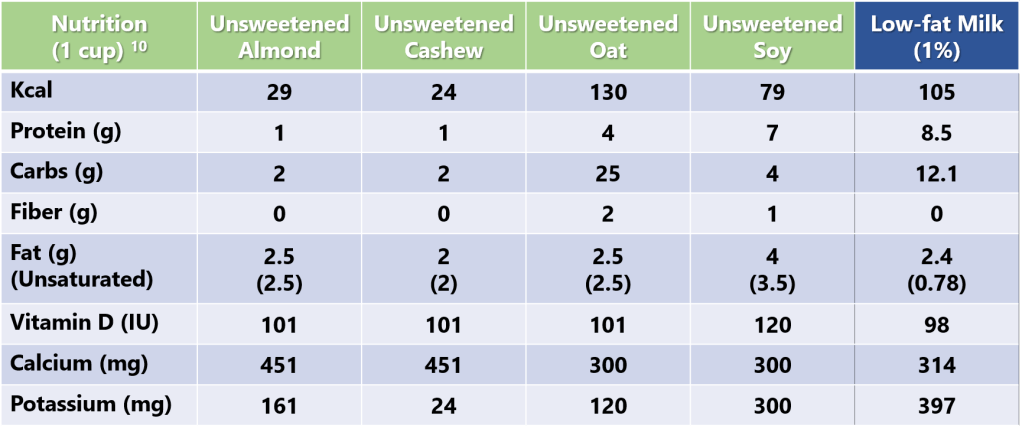
  • Calories: Almond and cashew beverages are lower in calories than oat and soy options. However, oat and soy milks have more fiber and protein – a powerful pair that makes you feel more satiated (and less likely to consume more). These can be considerations if you’re watching your weight.
  • Taste/texture: Different uses (coffee, smoothies, baking) may warrant different tastes and textures. Almond beverage runs watery while oat beverage is more creamy but can separate more easily in coffee. Soy beverages can sometimes have a beany-like flavor.
  • Nutrients: Fortification makes each option a good source of calcium and vitamin D. However, in my opinion, soy milk comes out on top as far as the most nutritional bang for your buck. It offers high-quality protein and isoflavones – all packed into an 80-calorie serving.

The Skim on Milk Alternatives

Milk alternatives offer options for folks with allergies, intolerances and individual diet preferences. While they can be used instead of dairy milk for culinary purposes, nutritionally they should not be considered the same (except for fortified soy beverage). This is particularly important for toddlers and growing children. If you choose to swap dairy for alternative beverages, be sure to adjust the rest of your diet as necessary to make up for the nutritional differences.

Whichever milk alternative you choose, aim to pick the fortified and unsweetened versions. Pro-tip: shake the container! All the added nutrients settle at the bottom.

Conclusion

Whether you’re topping off a glass, pouring a bowl, pulsing a smoothie or lightening up the color of your coffee, each type of milk or milk-like beverage offers something unique. Choose the option that best fits into your lifestyle, your overall diet needs, and your individual health goals.

Cheers,

Megan

Disclosure

Megan proudly works for National Dairy Council to support America’s dairy farmers. This article was written before her employment and all views in this blog are her own.


References:

  1. Edelstein, S. (2019). Food Science. An Ecological Approach. Burlington, MA: Jones & Bartlett Learning.
  2. Thorning, T. K., Raben, A., Tholstrup, T., Soedamah-Muthu, S. S., Givens, I., & Astrup, A. (2016). Milk and dairy products: good or bad for human health? An assessment of the totality of scientific evidence. Food Nutr Res, 60, 32527. doi:10.3402/fnr.v60.32527
  3. de Oliveira Otto, M. C., Lemaitre, R. N., Song, X., King, I. B., Siscovick, D. S., & Mozaffarian, D. (2018). Serial measures of circulating biomarkers of dairy fat and total and cause-specific mortality in older adults: the Cardiovascular Health Study. Am J Clin Nutr, 108(3), 476-484. doi:10.1093/ajcn/nqy117
  4. Pfeuffer M, Watzl B (2018) Nutrition and health aspects of milk and dairy products and their ingredients. Ernahrungs Umschau 65(2): 22–33.e14–e17
  5. American College of Allergy, Asthma & Immunology. (2019). Milk & Dairy Allergy. Accessed at http://acaai.org/allergies/types-allergies/food-allergy/types-food-allergy/milk-dairy-allergy
  6. NIH U.S. National Library of Medicine. (2019) Lactose Intolerance. Accessed at https://ghr.nlm.nih.gov/condition/lactose-intolerance#statistics
  7. Bhatnagar, S., & Aggarwal, R. (2007). Lactose intolerance. BMJ (Clinical research ed.)334(7608), 1331–1332. doi:10.1136/bmj.39252.524375.80
  8. Dawson-Hughes, B., Harris, S. S., Lichtenstein, A. H., Dolnikowski, G., Palermo, N. J., & Rasmussen, H. (2015). Dietary Fat Increases Vitamin D-3 Absorption. Journal of the Academy of Nutrition and Dietetics, 115(2), 225-230. doi:10.1016/j.jand.2014.09.014
  9. Tangpricha, V., Koutkia, P., Rieke, S. M., Chen, T. C., Perez, A. A., & Holick, M. F. (2003). Fortification of orange juice with vitamin D: a novel approach for enhancing vitamin D nutritional health. Am J Clin Nutr, 77(6), 1478-1483. doi:10.1093/ajcn/77.6.1478
  10. U.S. Department of Agriculture, National Nutrient Database for Standard Reference.
  11. Vanga, S. K., & Raghavan, V. (2018). How well do plant based alternatives fare nutritionally compared to cow’s milk? Journal of Food Science and Technology, 55(1), 10-20. doi:10.1007/s13197-017-2915-y
  12. Tobacman, J. K. (2001). Review of harmful gastrointestinal effects of carrageenan in animal experiments. Environmental Health Perspectives, 109(10), 983-994. doi:doi:10.1289/ehp.01109983
  13. Bixler, H. J. (2017). The carrageenan controversy. Journal of Applied Phycology, 29(5), 2201-2207. doi:10.1007/s10811-017-1132-4
  14. Messina, M. (2016). Soy and Health Update: Evaluation of the Clinical and Epidemiologic Literature. Nutrients, 8(12). doi:10.3390/nu8120754
  15. Shekhar, H.S., Howlader, Z.H., & Kabir, Y. (2017). Exploring the Nutrition and Health Benefits of Functional Foods. Hershey, PA: Medical Information Science Reference.

Nutrition Misinformation


You know what really grinds my gears? When people in the row behind you cut in front of you when exiting the airplane.

You know what else really grinds my gears? Nutrition misinformation.

I teetered back and forth about starting a blog for quite some time. I enjoy writing, researching, and poking a little fun at wacky health information. However, I had mixed feelings about blogging. Blogging can be personal, and I didn’t feel quite ready to put myself out there.

Fast forward to earlier this summer, when a coffee shop experience left me saying “C’mon Man,” and inspired me to go for it. I overheard two women chatting about their coffee choices. It went something like this …

  • Girl #1: “I always choose whole milk, it’s way healthier for you than skim milk.”
  • Girl #2: “Oh yeah, skim milk has all the added sugars and crap.”
  • Girl #1 and #2: Nod in agreement with their grande cinnamon dolce lattes.

This is just one of hundreds of instances where I have heard or read misinformed statements like this (FYI skim milk doesn’t have added sugar or “crap”). While there might be some truth to added sugar in low-fat packaged foods, or marginal differences in lactose between milks (note to self, write future post about milk options), homegirl here shared her anti-skim statement loud and proud. Yes, we are all entitled to our own opinions and dietary preferences. Food is personal. But how many other customers heard this conversation? How many people did they share this new “truth” with afterwards? And thus, nutrition misinformation continues to spread like a game of telephone.

So, I started this blog. My intention isn’t just to identify and clarify common misinformation (while that may be fun), but to create a forum where I can write about varying wellness topics related to food, fitness, and feels. My goal is to offer a resource that is reliable, is backed by evidence, and shares complicated health topics in an uncomplicated way. I’ll do the research, so you don’t have to.

Cheers!

~ Megan